
Cheapest Car Insurance for Retired Couples — Yonkers, NY
Free to compare
Why Your Yonkers Premium Rose When Nothing Changed
You opened your renewal notice last month and the six-month premium jumped $140. Your driving record is clean. You haven't filed a claim in years. The car is the same 2016 sedan you've owned outright since retirement. Yet the bill climbed again, and the agent's explanation—"rates adjusted for your risk profile"—told you nothing about what actually changed or what you can do about it.
Most Yonkers retirees face this same pattern: premiums drift upward through annual renewal cycles while mileage drops, violations stay off the record, and the household budget tightens. The gap isn't your driving. It's that you're paying rates built for a commuter profile you no longer fit, and your current carrier isn't automatically recalibrating for the 4,000 miles you now drive annually instead of the 12,000 you drove before retirement. The fix isn't waiting for your insurer to notice. It's understanding which discounts New York law requires, how to trigger them, and which Yonkers-area carriers actually apply low-mileage and mature-driver programs without making you fight for every dollar.
“New York requires every carrier to offer at least 10%, but most won't apply it unless you finish the course and ask.”

Compare New York Quotes Built for Retirees
Get My New York Retiree Auto Insurance Quote10%
NY Mandated Course Discount Floor
New York Insurance Law §2336 requires every carrier to offer at least a 10% reduction when you complete a state-approved accident-prevention course. The discount is age-neutral—retirees and 30-year-olds qualify equally—but most seniors don't know it exists because agents rarely volunteer it at renewal.
NY Ins. Law §2336 (10% accident-prevention course discount per NY DFS Circular Letter No. 1 (1980); age-neutral)
What New York's Mandate Actually Guarantees
New York is one of the few states where the mature-driver discount isn't a courtesy—it's required by statute. But calling it a "mature-driver" discount creates confusion. The law mandates that insurers offer at least 10% off when any driver completes a state-approved defensive driving course. There's no age floor. A 28-year-old and a 72-year-old both qualify if they finish the same six-hour course. The senior framing is marketing, not law.
The statutory floor is 10%. Carriers can exceed it—some file 15% or higher with the Department of Financial Services—but you won't know their filed amount until you ask directly or compare quotes. The mandate covers the baseline; the actual discount your current carrier applies lives in their rate filing, and most agents won't surface that detail unless you press. When you call to ask what completing the course will save you, the answer should reference their specific filed percentage, not a vague "it depends."
The certificate is valid for three years from the completion date. After 36 months, it expires. Your discount disappears at the next renewal unless you retake the course and submit a new certificate. Most carriers do not send expiration reminders. The discount silently drops off, your premium climbs, and unless you track the original completion date yourself, you won't catch it until you notice the bill increased again with no explanation.
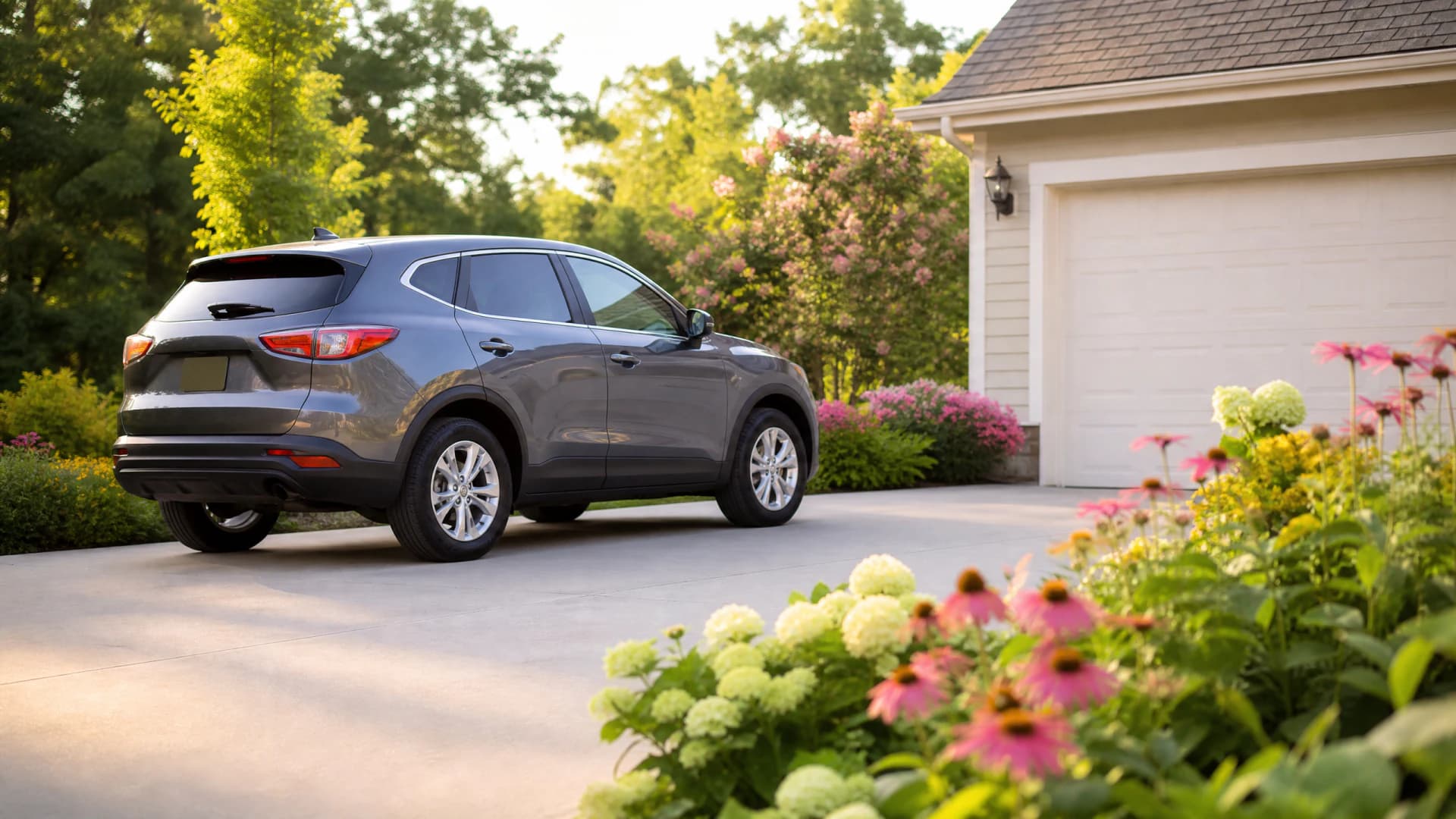
Your current carrier won't tell you when your course certificate expires. Track the three-year date yourself, or the 10% reduction vanishes at renewal with no warning.
Related Articles






Low-Mileage Programs Most Yonkers Agents Never Mention
You're driving 4,000 miles a year now that the Bronx commute is gone. Your policy still rates you at 10,000 because that's the default bracket your carrier assigned at your last renewal, and unless you called to update your annual mileage estimate, they haven't adjusted it. Low-mileage discounts exist at most major carriers writing in New York—Geico, Progressive, Nationwide, State Farm all offer them—but application is inconsistent. Some require you to report mileage changes proactively. Others verify through odometer photos submitted at renewal. A few use telematics devices that track actual miles driven and adjust your rate every six months based on recorded data.
Telematics programs scare some retirees because they sound invasive, but for a driver with a clean record who rarely exceeds 5,000 miles annually, they often deliver the steepest savings. Progressive's Snapshot, Nationwide's SmartRide, and Allstate's Drivewise all operate this way: a plug-in device or smartphone app monitors mileage, hard-braking events, and time-of-day driving. If you're putting 300 miles a month on a paid-off sedan and never driving between midnight and 4 a.m., the data works in your favor. If your driving pattern is erratic or you're uncomfortable with tracking, a standard low-mileage discount based on self-reported annual miles is the better fit.
Ask your current carrier two questions: what low-mileage threshold triggers a discount, and how is mileage verified. If they don't offer one, or if their verification process requires an in-person odometer inspection you can't easily schedule, that's a comparison trigger. Carriers writing in Yonkers vary widely on this. Geico applies mileage-based discounts automatically if you report under 7,500 miles at quote time. State Farm requires periodic odometer readings but doesn't use telematics. USAA offers usage-based programs but restricts eligibility to military-affiliated households. Knowing your carrier's structure tells you whether you're leaving money on the table by staying put.
$25,000
NY Bodily Injury Minimum Per Person
New York's mandatory minimum is $25,000 per person, $50,000 per accident for bodily injury, and $10,000 for property damage. If you own retirement assets—a paid-off home, savings accounts, investment portfolios—the state minimum exposes everything above $25,000 per injured person in an at-fault crash. Most Yonkers retirees carry far more risk than they realize.
NY Vehicle and Traffic Law financial responsibility minimums

Coverage Fit After You Stop Commuting
The car is paid off, worth about $6,500 according to the valuation tool your adult daughter ran last month, and you're questioning whether collision and comprehensive still make sense. The math here depends on your deductible and your six-month premium for those coverages combined. If your collision deductible is $1,000 and your combined collision-plus-comprehensive premium is $340 every six months, you're paying $680 a year to insure a $6,500 asset with a $1,000 gap before the coverage even activates. A total-loss payout after deductible would be $5,500. You'll recover your annual premium after about 8-9 years of no claims, assuming the car's value doesn't depreciate further. That's a judgment call, not a universal rule, and it hinges on whether $680 annually is significant to your household budget and whether you could replace the vehicle out-of-pocket if it were totaled.
Liability limits are a different calculation. The state minimum of $25,000 per person for bodily injury is catastrophically low if you own a home or carry retirement savings. A serious at-fault accident where the injured party's medical costs exceed $25,000—not uncommon in Westchester County, where hospital charges run high—exposes every asset you own above that floor. Your home, your bank accounts, your investment portfolio: all reachable in a judgment. Raising bodily injury limits to $100,000 per person, $300,000 per accident typically adds $80-$140 per six-month term for a retiree with a clean record. The incremental cost is small. The protection is structural.
Medicare and PIP: What Coordinates and What Doesn't
New York is a no-fault state, which means Personal Injury Protection coverage pays your medical bills after an accident regardless of who caused it. PIP is mandatory. You can't drop it. But if you're 65 or older and enrolled in Medicare, a coordination question arises: does Medicare pay first, or does PIP? The answer is PIP pays first for accident-related injuries up to your policy limit—typically $50,000 in New York—and Medicare pays only after PIP is exhausted. This matters because PIP has no deductible and no co-pays for covered expenses. Medicare has both. If you're injured in a crash and PIP covers the full cost of your emergency room visit, imaging, and follow-up care, Medicare never enters the picture.
The confusion happens when retirees assume Medicare makes PIP redundant and try to reduce PIP limits to save premium. You can reduce PIP to $25,000 in New York if you sign a waiver, but doing so exposes you to out-of-pocket costs if your accident-related medical bills exceed that lower limit and Medicare's deductibles and co-pays apply to the remainder. For a household on a fixed income, a $400 annual PIP premium is predictable. A $6,000 Medicare Advantage out-of-pocket maximum after a serious crash is not. Keep the higher PIP limit unless your household budget genuinely cannot absorb the premium, and even then, understand you're trading a small recurring cost for a large conditional one.

Which Yonkers-Area Carriers Apply Senior Discounts Without a Fight
Geico writes in New York, offers online quoting, and applies the state-mandated accident-prevention course discount when you submit your certificate through their portal. Their low-mileage discount triggers automatically if you report under 7,500 annual miles at quote time, and mileage verification happens through periodic odometer photo uploads, not in-person inspections. Geico also offers a senior-driver-specific telematics program—DriveEasy—that adjusts rates based on actual miles driven and driving behavior. If you're driving under 5,000 miles a year and avoid hard braking, the program usually works in your favor. Enrollment is optional, and you can unenroll mid-term if the data isn't helping.
State Farm operates through local agents in Yonkers and Westchester County. They offer the mandated course discount and recognize AARP and AAA defensive driving courses as qualifying, but application requires you to notify your agent and provide the certificate manually—it's not an automated portal upload. State Farm's low-mileage discount exists but is not as aggressive as competitors'; expect smaller savings unless your agent proactively reviews your mileage annually. Their strength is local agent access. If you prefer face-to-face policy reviews and don't want to manage everything through an app, State Farm's agent network is the trade-off.
Progressive writes in New York, quotes online, and offers Snapshot, their usage-based telematics program. For retirees driving under 6,000 miles annually with no late-night driving, Snapshot often produces double-digit percentage savings beyond the mandated course discount. The program monitors mileage, hard braking, and time-of-day patterns through a plug-in device or smartphone app. You'll see rate adjustments every six months based on your tracked behavior. If your driving is predictable and light, this works. If you occasionally drive to visit family in Pennsylvania or take weekend trips to the Catskills and your mileage spikes unpredictably, a standard low-mileage discount without telematics may be simpler.
Nationwide writes in New York, offers SmartRide (their telematics program), and applies the mandated course discount when you submit your certificate. Their agent network in Westchester is smaller than State Farm's, but their online quoting and policy management tools are robust. Nationwide's low-mileage discount structure is mileage-bracket-based: under 5,000 miles annually qualifies for one tier, 5,000-7,500 for another, and so on. Verification happens through self-reported mileage at quote time and periodic odometer checks, not continuous telematics tracking unless you opt into SmartRide voluntarily.
How to Qualify and Keep the Discount Active
Enroll in a New York DMV-approved accident-prevention course. The approved-provider list lives on the DMV website under the Driver Safety Programs section. Courses are offered online and in-person; both formats qualify equally under the statute. Online courses let you complete the six hours at your own pace, split across days if needed. In-person courses run as single-day Saturday sessions at community centers, libraries, and senior centers across Westchester County. Completion generates a certificate with your name, course completion date, and provider information. You'll receive it by mail within 7-10 business days for in-person courses, or as an immediate PDF download for online formats.
Submit the certificate to your insurance carrier, not to the DMV. The DMV does not process these for insurance purposes—they only track the certificate for point reduction on your driving record, which is a separate benefit. Call your agent or carrier's customer service line, confirm where to send the certificate (most accept email or upload through the policyholder portal), and ask explicitly when the discount will appear. The discount applies to the renewal following submission, not mid-term. If your renewal is two weeks away, submit immediately. If renewal is nine months out, you can wait, but submitting early avoids the risk of missing the window. Confirm the discount line-item on your next declaration page; if it's absent, call back and escalate.
Get Your Free Quote
Get My New York Retiree Auto Insurance QuoteFrequently Asked Questions
Does New York require insurers to offer a senior discount?
New York requires insurers to offer at least a 10% discount to any driver who completes a state-approved defensive driving course, regardless of age. The statute is age-neutral—it applies equally to a 30-year-old and a 75-year-old. The discount remains active for three years from the course completion date, then expires unless you retake the course and submit a new certificate.
How do I find a state-approved defensive driving course in Yonkers?
Visit the New York DMV website and navigate to the Driver Safety Programs section for the current list of approved providers. Courses are offered online and in-person; both formats qualify equally. In-person courses are held at community centers and libraries across Westchester County, typically as six-hour Saturday sessions. Online courses let you complete the requirement at your own pace over multiple days.
Will my insurer automatically apply the course discount at renewal?
No. You must submit your completion certificate to your carrier and confirm the discount appears on your next declaration page. The carrier does not track course completions automatically. If you complete the course but never submit the certificate, the discount will not apply. Submitting the certificate by email or through your carrier's online portal is typically sufficient; call to confirm receipt and ask when the discount will take effect.
Do low-mileage discounts apply if I'm only driving 4,000 miles a year?
Yes, but you must report your reduced mileage to your carrier. Most insurers assign a default annual mileage bracket at policy inception—often 10,000 or 12,000 miles—and won't adjust it unless you request a review. Carriers writing in New York like Geico, Progressive, and Nationwide offer low-mileage discounts, but thresholds and verification methods vary. Ask your carrier what mileage level triggers a discount and how they verify it.
Should I drop collision coverage on a paid-off car worth $6,500?
That depends on your deductible and the combined annual cost of collision and comprehensive coverage. If your deductible is $1,000 and you're paying $680 per year for both coverages, you'll recover your premium only after a total-loss claim, and the payout after deductible would be around $5,500. If $680 annually is significant to your budget and you could replace the car out-of-pocket, dropping collision may make sense. Liability coverage should never be reduced—your retirement assets are exposed in an at-fault crash if you carry only the state minimum.
Does Medicare replace the need for PIP coverage in New York?
No. New York requires Personal Injury Protection coverage, and PIP pays first for accident-related medical expenses regardless of your age or Medicare enrollment. Medicare only pays after your PIP limit is exhausted. PIP has no deductible or co-pays for covered expenses; Medicare has both. Reducing your PIP limit to save premium can expose you to out-of-pocket costs if your accident-related bills exceed the lower limit and Medicare's deductibles apply to the remainder.
Which Yonkers carriers make it easy to apply the course discount?
Geico, Progressive, and Nationwide all write in New York, offer online quoting, and allow you to upload your accident-prevention course certificate through their policyholder portals. Geico and Progressive apply the discount at the renewal following submission without requiring agent intervention. State Farm also offers the discount but requires you to submit the certificate directly to your local agent and confirm manually that it has been applied.