
The Premium That Didn't Drop When the Car Note Did
You made the final payment three years ago. The title arrived, you filed it, and the monthly car payment disappeared. Your auto insurance premium stayed exactly where it was. You're paying the same collision and comprehensive rates the carrier charged when the bank required full coverage, and you're now driving half the miles you did before retirement. The policy renews in sixty days and you want to know whether you're still buying coverage that earns its cost.
Most retirees keep full coverage on a paid-off vehicle because that's what the agent recommended when they financed and no one revisited the question. The bank's requirement ended when the lien released. What remained was a judgment call you never got to make. This article walks the coverage math for a retiree in New York driving a paid-off car lightly: when collision and comprehensive still protect an asset worth insuring, and when the annual premium costs more than the coverage would ever return.
Compare rates from carriers that specialize in senior drivers
Mature driver discounts, low-mileage rates, and coverage reviews — see what you're actually eligible for.
Get Your Free QuoteNY Bodily Injury Minimum Per Person
$25,000
New York requires $25,000 bodily injury per person, $50,000 per accident, $10,000 property damage, plus mandatory PIP and uninsured motorist coverage. These minimums apply regardless of vehicle value or age; dropping collision doesn't change your liability floor.
NY Vehicle and Traffic Law §311
What You're Actually Paying For
Collision covers damage to your car when you hit another vehicle or object, regardless of fault. Comprehensive covers theft, vandalism, weather damage, hitting an animal. Both pay the actual cash value of your car at the time of loss, minus your deductible. Neither covers liability to others; that's what your bodily injury and property damage coverage does, and those stay in force whether you keep collision or not.
The carrier bases your collision and comprehensive premium on your car's current market value, your deductible, your ZIP code's theft and weather risk, and your driving record. As your car ages and depreciates, the maximum payout the carrier would ever owe you shrinks. Your premium should track that depreciation curve. It often doesn't. Many carriers lower the rate slowly or not at all, and the gap between what you pay annually and what the car is worth widens every renewal.
When you financed, collision made sense: the bank required it, and the car's value justified the premium. Now the car is worth less, you drive it less, and the financing requirement is gone. The question is whether the annual cost of collision and comprehensive stays below the threshold where the coverage pays for itself over the vehicle's remaining useful life.
You lack one number: your car's current actual cash value. Without it, you cannot run the coverage math. Pull a valuation from your insurer or an independent source before your renewal date.
The 10 Percent Decision Threshold
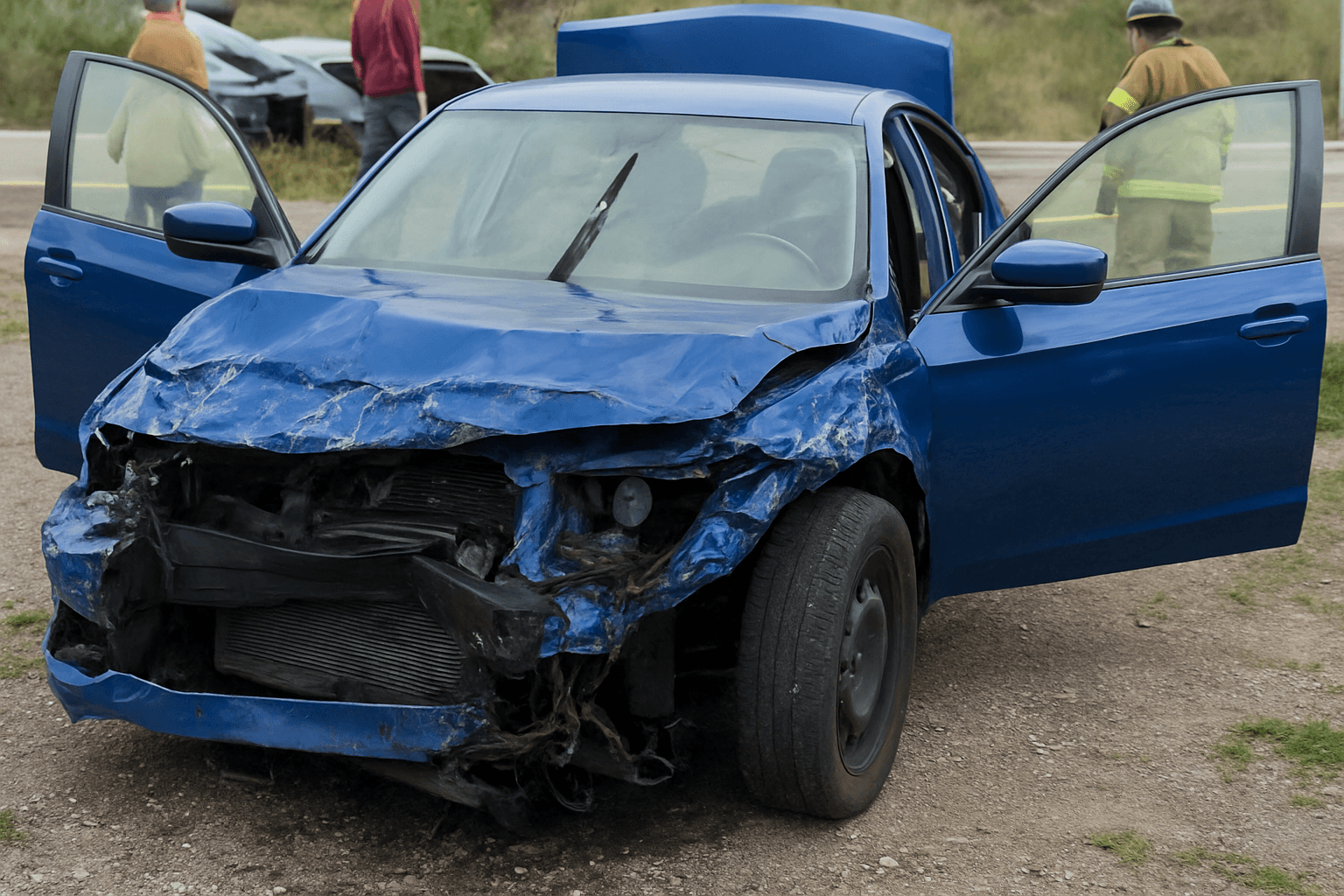
If your car is worth $8,000 and your combined collision and comprehensive premium is $950 per year, you're paying nearly 12 percent of the car's value annually for coverage that, at most, would return $8,000 minus your deductible. Over two renewal cycles you'll have paid more in premium than a total-loss claim would ever pay you. The coverage has crossed from asset protection into a losing bet. If the same car is worth $15,000 and the premium is $720 annually, you're at 5 percent: the coverage still makes sense because a total loss would cost you far more than two or three years of premium.
Run this calculation with your own figures. Take your car's current value from a recent appraisal, your insurer's valuation tool, or an independent source. Divide your annual collision and comprehensive premium by that value. If the result is above 10 percent, the math has likely turned against you. If it's below, the coverage still protects an asset worth insuring. Your deductible matters here too: a $1,000 deductible on a $7,000 car means the most you'd ever collect is $6,000, and if your annual premium is $850, you're paying 14 percent of the net payout annually.
Related Articles




Liability Stays In Force No Matter What You Drop
Dropping collision and comprehensive does not reduce your liability coverage. Liability insurance in New York requires $25,000 bodily injury per person, $50,000 per accident, and $10,000 property damage as the statutory minimum. You also carry mandatory personal injury protection and uninsured motorist coverage. These coverages protect you when you injure someone else or damage their property, and they remain in full effect whether your own car is insured for physical damage or not.
Retirees often carry liability limits higher than the state minimum because retirement-era assets are exposed in an at-fault accident. If you carry $100,000/$300,000 bodily injury limits and $100,000 property damage, that protection continues unchanged when you drop collision. The decision to keep or drop physical-damage coverage on your own car is entirely separate from the liability coverage that protects your assets when you're at fault.
Medical payments coverage and PIP interact with Medicare for retirees injured in an accident. PIP is mandatory in New York and pays first, up to its limit, before Medicare kicks in. Medical payments coverage is optional and pays after PIP exhausts. If you carry med-pay and Medicare, coordinate with both to understand which pays first for a given treatment. Dropping collision does not affect PIP, med-pay, or Medicare coordination; those are separate coverage decisions.
NY Mature Driver Discount Floor
10%
New York requires insurers to offer at least a 10% discount to drivers who complete a state-approved defensive driving course. The discount is age-neutral by statute but marketed as a mature-driver benefit. You must submit proof of completion; carriers do not apply it automatically.
NY Ins. Law §2336 (10% accident-prevention course discount per NY DFS Circular Letter No. 1 (1980))
What Happens When You Drop Collision Mid-Policy
You can drop collision and comprehensive at any point during your policy term by contacting your carrier or agent. The carrier will remove the coverage, recalculate your premium for the remainder of the term, and issue a refund for the unused portion. Most carriers process the change within a few business days. The removal is permanent for that policy period; you cannot add the coverage back mid-term without underwriting review, and if your car's value or your driving record has changed, the rate may not match what you paid before.
If you drop collision and later total the car in an at-fault accident, you receive nothing for your vehicle's damage. Liability coverage pays the other driver; your car is a total loss you absorb. If the car is financed or leased, the lienholder will require you to reinstate collision coverage immediately or face default. On a paid-off car, no one can compel you to carry it. The risk is yours to manage, and the decision turns entirely on whether the coverage cost justifies the asset it protects.
When Low Mileage Changes the Equation
You drive 6,000 miles a year now that the commute is gone. Fewer miles mean lower accident exposure, and some carriers offer low-mileage discounts or usage-based programs that reduce your premium when you drive less. These programs do not change the coverage-fit math directly, but they can lower the annual cost of collision and comprehensive enough to keep the percentage below the 10 percent threshold for another year or two.
Ask your carrier whether a low-mileage discount or a telematics program applies to your policy. Some programs require an odometer photo at renewal; others use a plug-in device or smartphone app to verify mileage. If the discount drops your collision and comprehensive premium below the threshold, the coverage may still earn its cost. If it doesn't, the program saved you money but didn't resolve the underlying question: you're still paying a meaningful percentage of your car's value annually for coverage that depreciates with the vehicle.
Compare Carriers Before You Drop Coverage
Before you drop collision and comprehensive, compare what other carriers writing in New York would charge for the same coverage on your paid-off car. Carriers price physical-damage coverage differently for retirees, and some offer meaningfully lower rates for low-mileage drivers with clean records. If another carrier's collision and comprehensive premium keeps you below the 10 percent threshold, switching preserves the coverage at a cost that still makes sense. If every quote you pull exceeds the threshold, the market is telling you the coverage no longer fits your vehicle's value, and dropping it is the right financial decision.
New York requires insurers to offer the mature-driver-course discount, and the statute sets the floor at 10 percent for drivers who complete a state-approved defensive driving course. Not all carriers apply the discount automatically; you must submit proof of completion, and the discount applies to collision, comprehensive, and liability premiums. If you haven't taken the course in the past three years, complete one before you compare carriers. The discount can lower your physical-damage premium enough to extend the window where collision and comprehensive still earn their cost. The course itself costs you time and a modest enrollment fee, but the statutory discount is locked and verified, and it renews every three years when you retake the course.